The world of beauty is changing as artificial intelligence transforms the skincare industry. There is no need to rely only on general advice anymore, as AI-powered beauty apps can analyse your skin and provide highly customised product recommendations to help you have healthier skin.
If you struggle with any skin issue, whether it is acne, dry skin, hyperpigmentation, wrinkles, or something else, then with the assistance of AI-powered apps, it will be easier than ever to analyse your skin professionally from home.
What Are AI-Powered Beauty Apps?
AI-Powered beauty apps are software applications that use artificial intelligence to perform analysis of your skin based on photos, questionnaire results or camera scans. Some of the skin characteristics that can be analysed include:
- Appearance of skin
- Wrinkles and fine lines
- Acne severity
- Dark spots and pigmentation
- Pores size
- Redness of skin
- Skin oiliness
- Skin hydration
- Tone evenness
Based on a comparison of your photos with extensive databases of other skin images, these smart apps will help you choose the right products for your skin needs.
Methods That AI Beauty Apps Use to Analyse Your Skin
1. Facial Image Recognition
Usually, skincare AI applications request users to take a picture of themselves or allow them to use smartphone cameras. Using advanced computer vision techniques, AI recognises facial landmarks and evaluates various skin issues at once.
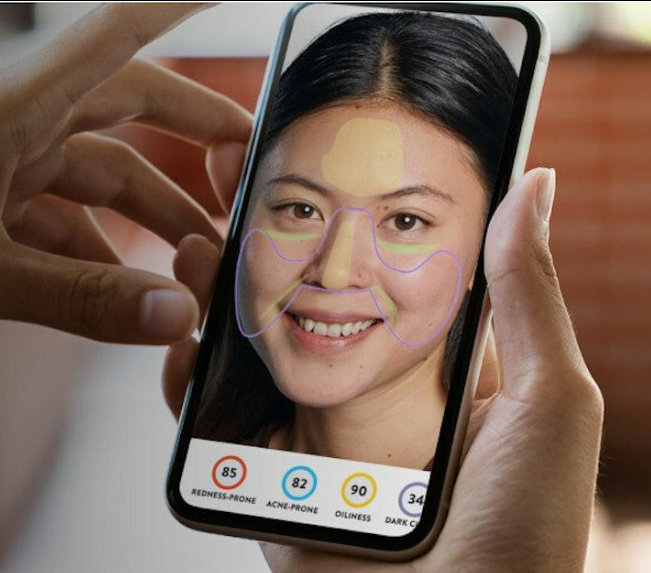
The AI can analyse the following skin problems:
- Skin tone inconsistencies
- Presence of acne lesions
- Pores’ enlargement
- Fine wrinkles
- Photodamage
- Skin around eyes darkening
- Loss of elasticity
It takes less than one minute for such a procedure. Read more on AI-Powered Beauty Apps: The Future of Personalized Skincare
2. Lifestyle Information
Besides analysing pictures, AI applications collect information about the following:
- Age
- Gender
- Climatic conditions
- Diet
- Habits of sleeping
- Life stress
- Intake of water
- Current skincare regimen
- Allergens
- Skin sensitivity
Additional data helps to make more accurate recommendations.
3. Machine Learning Developments
Another advantage of AI is its constant learning. The more users update their skin condition after weeks or months, the more AI adjusts recommendations based on the real results and creates more personalised regimens.
Advantages of Personalised Skincare with Help of AI. Read more: How Artificial Intelligence Is Transforming the Beauty Industry
Product Recommendations
As opposed to buying skincare products through advertisements or social media suggestions, AI applications offer you ingredients and formulas that fit your skin type best.
For example:
- Oily skin – niacinamide, salicylic acid;
- Dry skin – ceramides, hyaluronic acid;
- Old skin – retinol, peptides;
Early Detection of Skin Issues
There are several AI-based beauty applications which will be able to detect emerging skin problems before they become severe. Even though such applications do not replace dermatologists but will push users to see specialists if there are some peculiarities found on the skin.
Cost Saving
Personalised recommendations will eliminate costs associated with a trial-and-error approach to choosing ineffective skincare products. Users will spend money on products that will be suitable for their skin type.
Progress Monitoring
Many AI applications provide the function of comparison between “before” and “after”, which will allow people to track their improvement over time.
Such progress reports usually include the following factors:
- Reduction of acne;
- Improvement of wrinkles;
- Hydration levels;
- Brightness of skin;
- Pigmentation changes.
Visible improvement motivates people to follow skincare routine regularly.
Popular AI-Based Beauty Apps
Some innovative applications have become popular due to the provision of AI-powered skincare tips.
YouCam Makeup
This application initially was known for its virtual make-up, but now it is capable of analysing a user’s face and detecting elements of skin such as wrinkles, spots, pores, acne, and hydration levels, with suggestions for skincare tips.
L’Oreal Skin Genius
The application uses dermatological research and suggests personal skincare advice based on facial analysis and lifestyle data of users.
TroveSkin
TroveSkin helps to monitor how your skin changes over time with the purpose of understanding the influence of different products and habits on the state of your skin.
Haut.AI
This innovative AI application concentrates on scientific skin diagnostics and offers a comprehensive assessment of skin using the method of deep learning.
SkinVision
It is worth mentioning SkinVision, as it was created for monitoring skin lesions which could require medical intervention, but not for cosmetic skincare.
Main Technologies Used in AI Beauty Apps
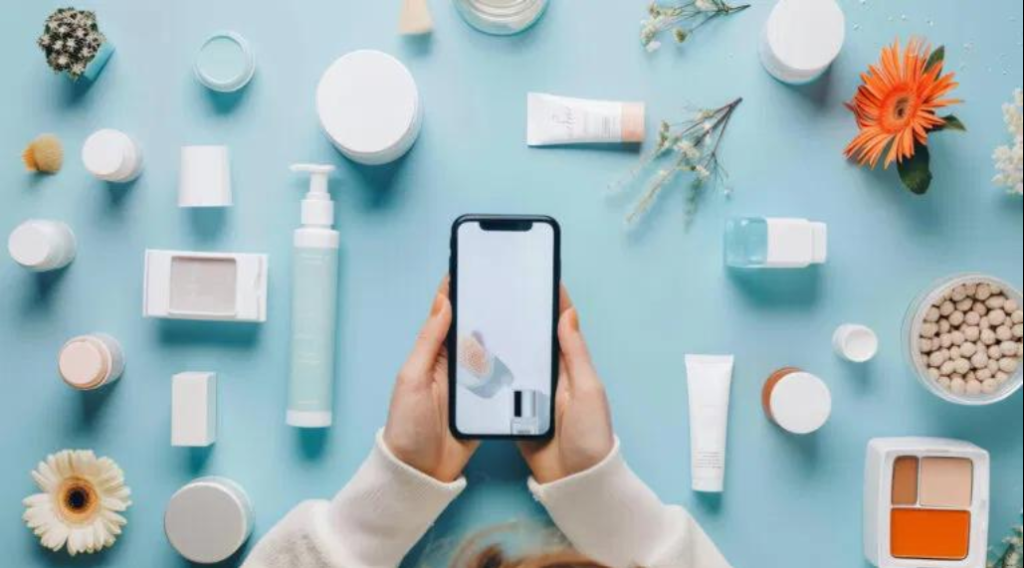
Computer Vision
Computer vision allows interpreting facial photos and detecting skin features which are hardly visible to an untrained eye.
Deep Learning
With deep learning, AI models will continuously learn from huge datasets of skin photos,, which will increase diagnostic accuracy.
Predictive Analytics
Predictive algorithms will be able to predict how your skin will react to various ingredients, which will prevent the use of ineffective products.
Cloud Computing
Thanks to cloud computing, models will be able to analyse a huge amount of image data fast enough and update suggestions constantly.
Common Ingredients Suggested by AI
Depending on the results of your skin analysis, the following ingredients may be suggested to you by an AI skincare app:
For Acne:
- Salicylic acid
- Benzoyl peroxide
- Niacinamide
- Azelaic acid
For Dry Skin:
- Hyaluronic acid
- Ceramides
- Glycerin
- Squalane
For Hyperpigmentation:
- Vitamin C
- Tranexamic acid
- Kojic acid
- Alpha arbutin
For Anti-Aging:
- Retinol
- Peptides
- Vitamin C
- Bakuchiol
- Coenzyme Q10
AI Beauty Apps vs Conventional Skincare Consultations
AI Beauty Apps Conventional Consultations
Always available Appointment needed
Cheaper Expensive
Instant analysis Time needed
Monitoring of results Periodic monitoring of results
Personal recommendations Personal recommendations
No ability to diagnose medical conditions Ability to diagnose medical conditions
AI apps supplement but do not substitute qualified dermatologists when handling chronic or complicated skin issues.
Privacy and Protection of Personal Data
Given the fact that AI beauty apps use facial images and personal data extensively, it is important to read privacy policies carefully.
Select apps that:
- Encode your personal data
- Have an option to delete the data
- Inform about the ways of using your images
- Comply with data protection laws
- Do not sell your information without your permission
The protection of your biometric data is always important.
Ways to Make Your AI Skin Analysis More Accurate
To ensure the greatest accuracy:
- Take pictures under natural light.
- Don’t wear makeup.
- Cleanse the lens of your device.
- Have a neutral facial expression.
- Take scans under the same lighting.
- Upload new progress updates regularly.
AI’s Future in Custom Skincare
The rapid development of artificial intelligence is evident. The future beauty AI platforms might have such features as:
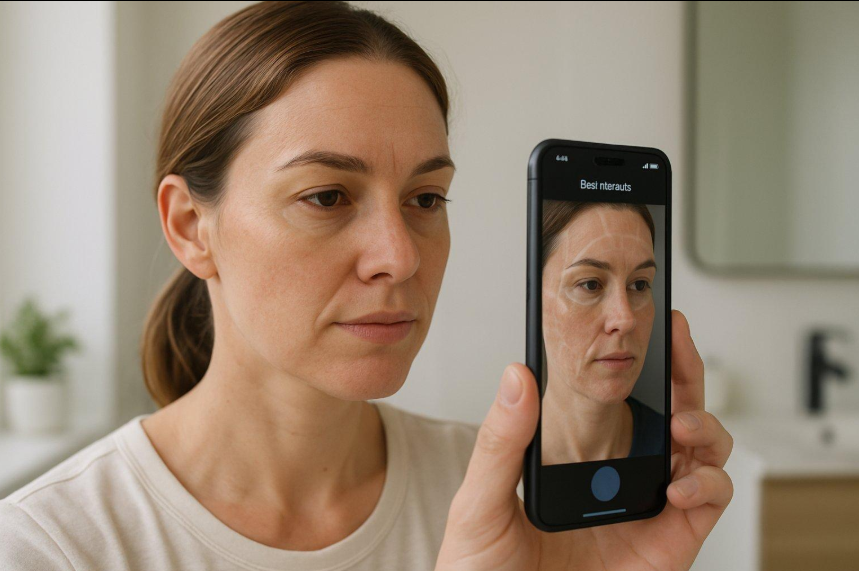
- Skin analysis in real-time using wearable technologies
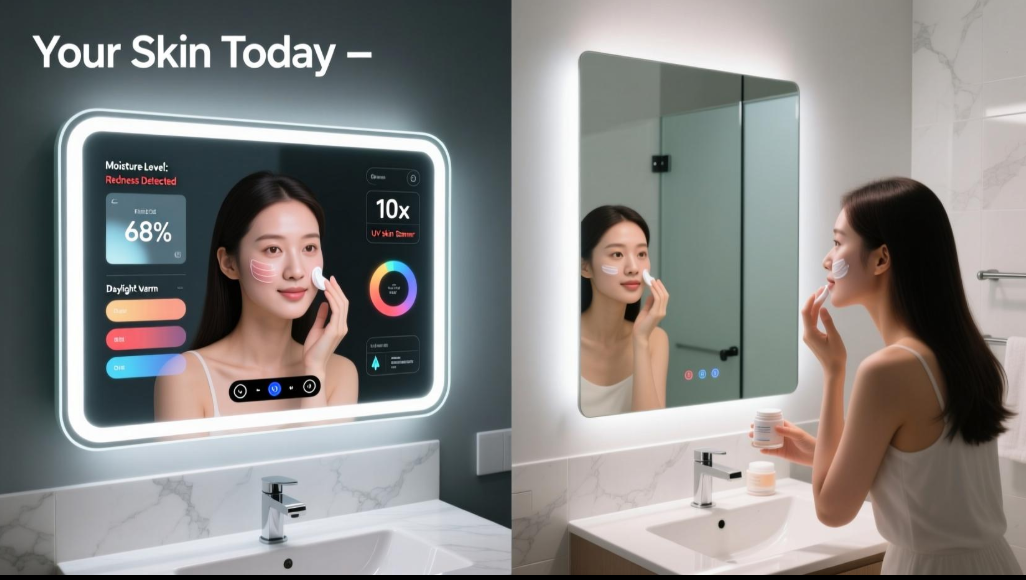
- Mirrors connected to AI systems
- Suggestions for DNA-based skincare
- Ingredient analysis through AI
- Aging simulation
- Supplement suggestions
- Guided skincare coaching via voice commands
- Merging with teledermatology
With more advanced AI models, personalised skincare would be more precise and available. Read more: Why AI Skin Analysis Is Changing Modern Skincare
Is It Worth Using AI in Your Beauty Apps?
For many users, AI applications for beauty give an opportunity to get acquainted with one’s skin and create a customised skincare routine at a moderate price. However, one needs to consult a dermatologist to handle complicated cases of skin disorders. In any case, AI beauty apps make people more knowledgeable about skincare through product and routine suggestions based on objective evaluation.
The integration of artificial intelligence and dermatology through mobile technologies helps people get radiant skin with the help of personalised solutions.
Frequently Asked Questions (FAQs)
Do AI beauty applications reliably identify skin problems?
AI beauty applications reliably identify skin problems such as acne, wrinkles, pigmentation, and dryness. Nevertheless, they cannot replace a dermatologist’s consultation in the diagnosis of health issues.
Are AI recommendations for skincare reliable?
Most AI applications are developed based on vast databases and scientific evidence in dermatology; therefore, they give useful recommendations for skincare. Nevertheless, it is recommended to test any new product before use and consult a dermatologist in case of serious skin issues.
Are AI beauty apps effective for all skin colours?
Leading AI applications for skincare rely on diverse data sources; thus, their recommendations may work for all skin colours. Nevertheless, the performance of each application may vary.
Is my facial data safe while using AI skincare apps?
Reliable AI skincare apps ensure the security of users’ personal information through encryption and other privacy measures. Reviewing the privacy policy of the app before uploading images is always a good idea.
Can AI replace a dermatologist?
No. AI applications are aimed at helping with regular skincare and giving customised advice; however, they do not diagnose or cure any diseases.
Consulting a qualified dermatologist in case of persistent skin issues is essential.